Climate change is introducing unprecedented challenges to civil and geotechnical engineering. Extreme weather events, changing groundwater levels, and increased coastal flooding directly impact the stability of soils and the foundations they support. As the climate evolves, so must geotechnical practices to ensure the resilience of our national infrastructure.
Prolonged droughts can cause expansive soils to shrink and crack, while intense rainfall can trigger severe slope instability and landslides. Geotechnical engineers are now tasked with designing embankments, retaining walls, and foundations that can withstand these extreme fluctuations. This includes developing advanced drainage systems, utilizing geosynthetics for soil reinforcement, and adopting sustainable earthwork practices. Future-proofing infrastructure requires a deep understanding of soil-water interactions and a proactive approach to risk management, making geotechnical expertise more vital than ever in the era of climate change.
Urbanization often pushes construction into areas with challenging or weak soil conditions, such as soft clays, loose sands, or reclaimed lands. In such scenarios, traditional deep foundations can be economically unviable. This is where advanced ground improvement techniques come into play, offering innovative solutions to enhance the engineering properties of the in-situ soil.
Techniques such as jet grouting, pile base grouting, and pressure grouting have revolutionized the way geotechnical engineers approach weak soils. Jet grouting, for instance, uses high-velocity fluid jets to excavate and mix the soil with a cementitious binder, creating structural geometries directly underground. These methods significantly increase the soil's load-bearing capacity, mitigate settlement issues, and provide excellent groundwater control. By treating the soil rather than bypassing it, engineers can ensure long-term foundation stability while maintaining project efficiency and sustainability.
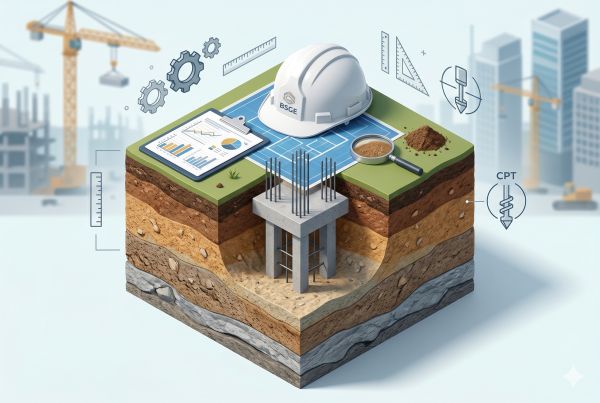
Subsurface exploration is the foundational step in any major construction project, particularly for high-rise buildings. Before a single brick is laid or concrete is poured, geotechnical engineers must understand the complex layers of soil and rock beneath the surface. This process involves drilling boreholes, conducting standard penetration tests (SPT), and extracting soil samples for rigorous laboratory analysis.
The primary objective is to determine the soil's bearing capacity, settlement characteristics, and the depth of the groundwater table. In earthquake-prone regions like Bangladesh, assessing the liquefaction potential of the soil is also critical. Without a comprehensive subsurface investigation, engineers cannot accurately design the foundation—whether it be shallow footings or deep pile foundations. Investing in thorough soil testing not only ensures the structural integrity and safety of the building but also optimizes construction costs by preventing over-engineering and avoiding unforeseen ground failures during or after construction.